What you can see on the Dymchurch webcams
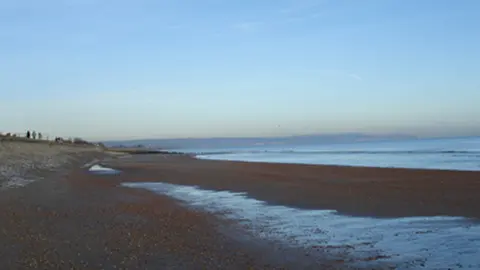
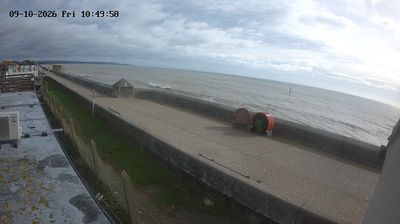
The live view and its 24-hour time-lapse show the same scene: the wide walkway along the top of the wall, rows of wooden groynes crossing the sand, and the coast curving away towards Hythe, with ships out on the Channel. The live picture tells you what the beach is like now; the replay is the easiest way to watch the tide run out across the sands and come back in.
Dymchurch beach webcam: the tide on the sands
From the roof of a seafront building, behind a fence and a strip of grass, this camera looks along Dymchurch's broad concrete sea wall. The wide walkway on top of the wall runs away into the distance, and beside it the sands stretch out to the sea, crossed by rows of wooden groynes. The coast curves away on the skyline towards Hythe and the hills behind it, and ships pass on the horizon of the Channel.
The best use is the tide: at low water the sands are huge and dog walkers dot the beach; at high tide the sea comes up towards the foot of the wall. The open sky also makes it a good check for sunshine along the Romney Marsh coast.
A wall against the sea
Romney Marsh covers about 100 square miles of flat land, some of it below sea level, and Dymchurch sits right on its seaward edge. The Dymchurch Wall has kept the sea off the marsh for centuries. It is often said to be Roman, but that is a myth: it was raised after storms broke through the old shingle barrier, and it has since been rebuilt. Today you can walk along the defences for the whole length of the village.
Several Martello towers were built along this shore in the 19th century, part of the coastal defences against Napoleon, and the miniature Romney, Hythe and Dymchurch Railway, opened in the 1920s, has a station in the village. The flat marsh and its waterways were smuggling country from the 17th to the early 19th century, which is what inspired Russell Thorndike to set his Doctor Syn novels in Dymchurch.
When to watch Dymchurch
The shore faces south-east, so the sun comes up over the Channel and mornings are bright along the wall. Low tide is the time to see how far the sands reach, with dog walkers scattered across them; at high water the sea comes up towards the foot of the wall, and on a stormy day with an onshore wind you can see why it was built. In summer the camera is a quick way to check for sunshine on the Romney Marsh coast and how busy the beach is before driving down.
Around Dymchurch
North-east along the coast are Hythe and Folkestone, with its Harbour Arm, and beyond the cliffs, Dover. South-west, the little railway runs on across the marsh to New Romney and the shingle of Dungeness.